
Welcome World
TFM MUSIC COLLECTION
Every successful organism must FIGHT TO ENDURE
A Noted Collection
TFM is a digital museum exploring how struggles in boxing rings, war, and society shaped America, 1890–1929
This presentation is made possible through the generous support of Mark Cavanagh Productions. Thank you.
COLLECTION MENU > TFM Collection, > TFM Music Collection, >< TFM Print Collection
MUSIC and SOUND MATERIALS
Featuring Items That Reflect Moments That Truly Matter
TFM is committed to preserving and sharing not only histories, but the lived experiences of the past as captured in song, recordings, and related visual materials.
These items do more than reflect moments—they serve as evidence of how people expressed emotion, maintained connection, and made meaning during times of uncertainty, conflict, and change.
Through them, we gain access to a dimension of history that is both immediate and deeply human—one that allows us to hear, and not just read, how the past was lived.
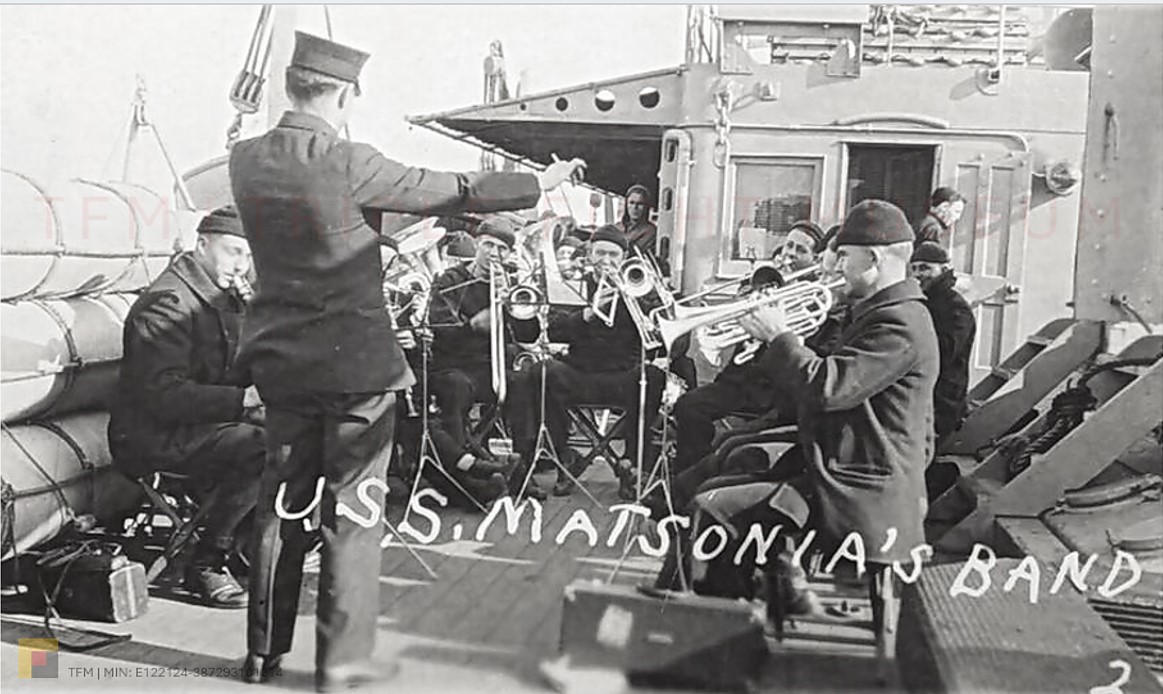
Photo: An undated World War I postcard showing a band performing aboard the USS Matsonia, one of many former passenger ships used to transport American service personnel across the Atlantic. Whether departing for war or returning home, music accompanied these long passages—easing tension, relieving boredom, and providing moments of connection during journeys marked by uncertainty, reflection, and transition.
What We Collect
Voices of the Homefront—and the Echo of War
Among the most evocative holdings in the TFM Collection is a substantial body of World War I–era patriotic sheet music, supported by a smaller but meaningful collection of early recorded sound, including rare 78rpm records.
These materials open a deeply personal window into how Americans experienced Fights Among Nations not on distant battlefields—but within their homes, communities, and daily lives.
Four Dimensions of Experience
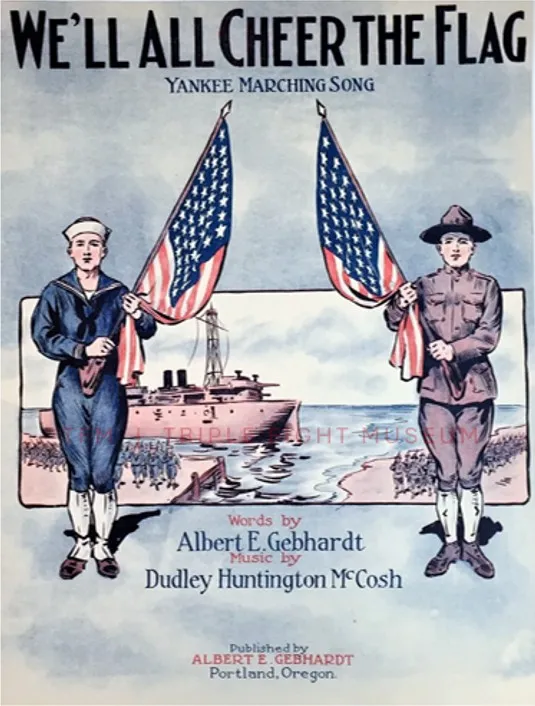
Rallying around the American flag was a unifying theme during the First World War. It assumed social differences would be erased by prioritizing devotion to the flag.
Most of the sheet music in the TFM Collection reflects four interconnected dimensions of the wartime experience:
1. The Call to Serve—and the Cost of Departure
Songs that stirred patriotic duty while simultaneously expressing the emotional weight of separation—families parting, uncertainty ahead, and the quiet heartbreak of goodbye.
2. Preparation and Departure
Music capturing the transition from civilian life to military service—training camps, anticipation, and the symbolic journey “over there.”
3. Life in War
Compositions reflecting the realities of war—at times heroic, at times lonely, and often marked by grief, loss, and remembrance of fallen comrades.
4. Victory and Return
Songs celebrating triumph and homecoming, while also revealing the emotional complexity of return—relief, pride, and the lasting imprint of war.
These items offer intimate, often emotional glimpses into the hopes, fears, and challenges felt during a time of global conflict, when protecting the home front from a formidable enemy was paramount.
Music as Connection
These were not passive artifacts.
They were used.
Played in living rooms, gathered around pianos, sung in groups—these sheets became a means through which families remained emotionally connected to loved ones in service.
They allowed individuals at home to:
- participate in the national experience of war
- express feelings that could not easily be spoken
- maintain a sense of closeness across distance and uncertainty
In this way, sheet music served as both personal expression and shared public culture.
The Power of the Image
The covers of these sheets are as important as the music itself.
Bold, vivid, and often emotionally charged, they were designed to:
- evoke pride, longing, or reassurance
- visually connect the user to those serving
- reinforce national identity and shared purpose
Each time a piece was opened and played, the image on its cover reintroduced the user to the emotional world of the war—making the experience immediate and present once again.
Deep Divisions—Despite War
America’s Complicated Legacies
The collection also includes a small number of pieces reflecting Blackface imagery and Southern sentimental themes associated with “Dixieland.”
These materials are presented not as celebration, but as evidence—revealing how race, identity, and nostalgia were constructed and communicated within American culture during this period.
They form part of a broader and necessary understanding of how cultural expression both reflected and reinforced social hierarchies.
Sound as a Historical Record of Boxing In America
The thoughtfully curated materials in the TFM Collection reveal meaningful connections between music and the three central arenas of THE TRIPLE FIGHT: boxing, war, and the ongoing struggle for equality and justice. Many Americans recognize the role of music in military life and its power in social movements—songs like “We Shall Overcome” standing as enduring expressions of collective purpose. What the TFM Collection demonstrates is that music also played a vital role in shaping how communities understood and engaged with boxing and one another. Through song and sound, fighters were not only celebrated but also interpreted—becoming figures through which identity, pride, and social meaning were expressed across diverse communities across America—revealing boxing not simply as a sport but as a cultural force shaped and understood through music.
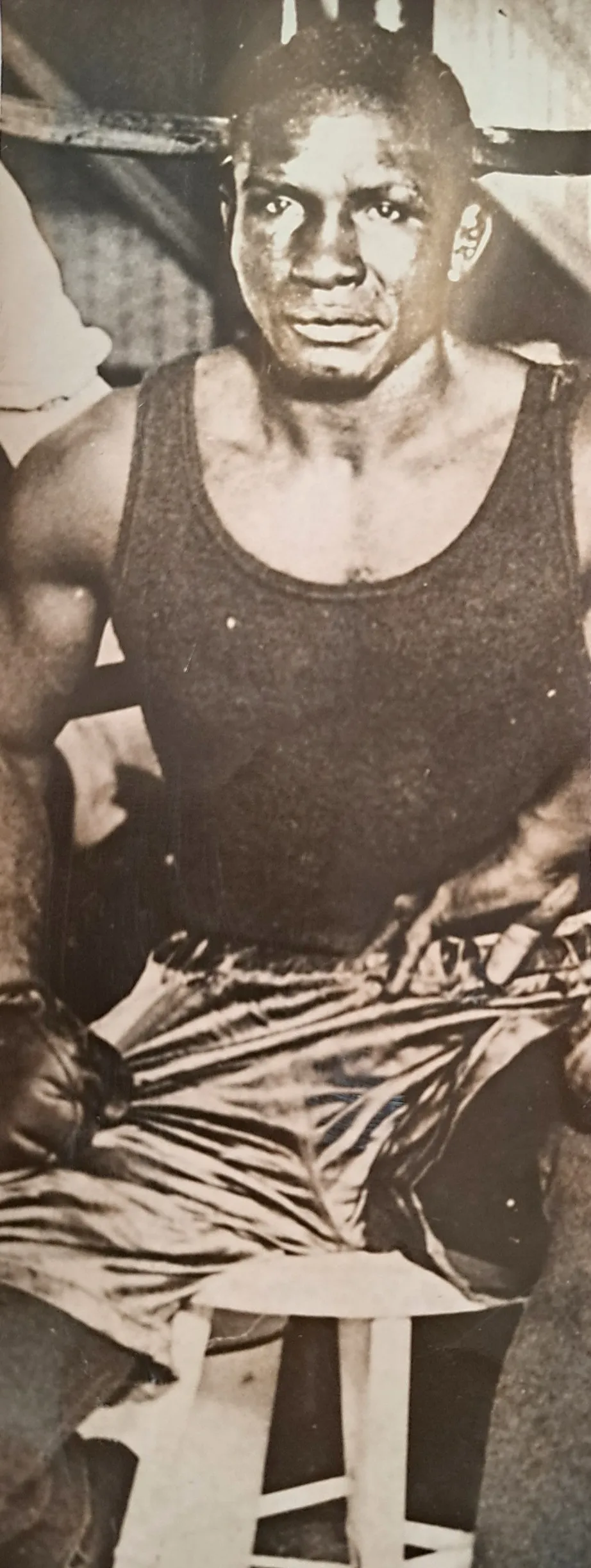
Photo – A cropped view of a newswire photo held in the TFM Collection that provides a view of world middleweight champion Tiger Flowers posing for a cameraman while training.
Featured Recording: A Tribute to Tiger Flowers
Tiger Flowers was the only African American to be granted access to a division title bout during the first half of the 1920s, despite a rich field of highly competitive Black contenders. Flowers won the world middleweight championship in 1926 and became the first Black man to hold that title. By the end of 1927, he was dead. Flowers’ death, attributed to complications from what was supposed to be a routine medical procedure, shocked the sports world, but its toll on Black America received little attention. TFM has a rare 78 rpm recording that may help change things.
This rare 78 rpm recording, composed and performed by Porter Grainger—an influential figure of the 1920s blues and jazz scene—offers a moving glimpse of the loss felt within the African American community and helps anchor the moment within a broader cultural landscape marked by extraordinary creativity amid profound social constraint. Grainger is perhaps best known as co-composer of “Ain’t Nobody’s Business If I Do,” a song that became one of the earliest blues standards and was later recorded by numerous artists, including Billie Holiday.
Through this tribute, the TFM Collection preserves more than sound—it preserves sentiment. It allows us to hear how a community responded to the loss of a champion whose life and career carried meaning far beyond the ring.
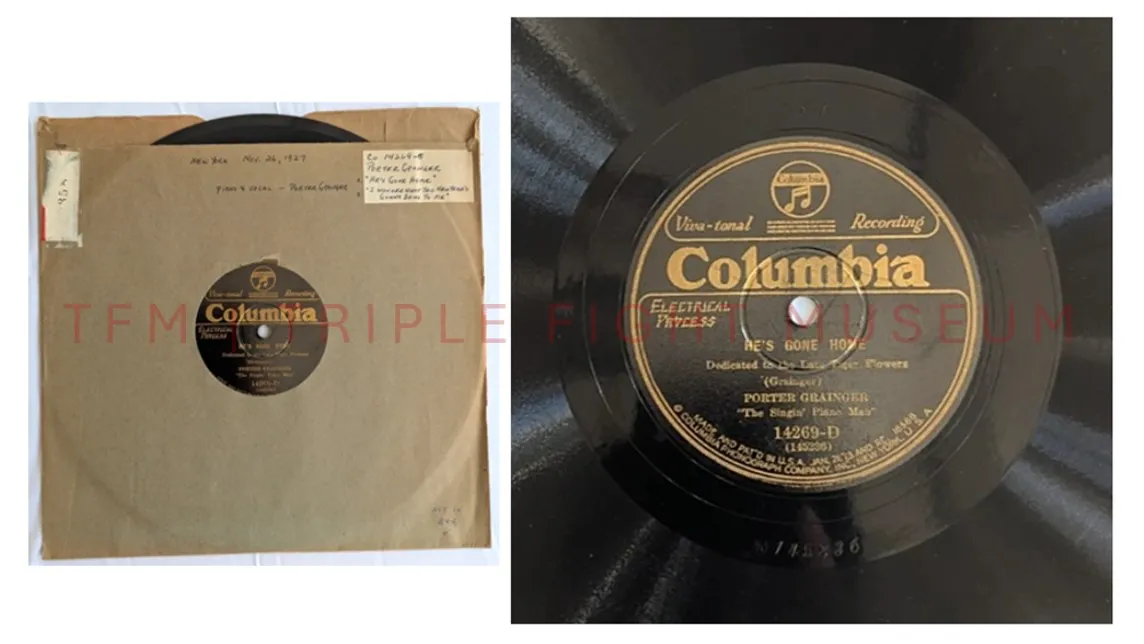
TFM’s COLLECTION OF sheet music and early 78rpm recordings offers rare access to how voices, music, and performance sounded in their own time and invites us to discover their significance then and now.
COLLECTION MENU > TFM Collection, > TFM Music Collection >< TFM Print Collection
Now Launching: The TFM Centennial PLUS Campaign
Join the Work
Every effort to preserve and share meaningful history requires support.
The TFM Centennial-PLUS Campaign provides a way to take part in this work—helping ensure that these stories are not only told, but endure.
Remember: FREEDOM is never FREE and GOOD requires MIGHT.
Join the FIGHT
Become a Member | Support the Centennial | Explore the Collection
TFM – In the FIGHT FOR GOOD