
Welcome World
Flowers-Greb Comparisons
TFM Menu > TFM HIGHLIGHTS –> F1 (BOXING) –> FEATURED BOXERS –> Tiger Flowers
PRESENTATION ACCESS PANEL
It Took A TIGER
To Fracture Boxing’s Color Line
An Under-Told Account of Transformation Among Middleweights
PRESENTATION MENU
Side-by-Side Comparisons: Tiger Flowers and Harry Greb (1923-1926)
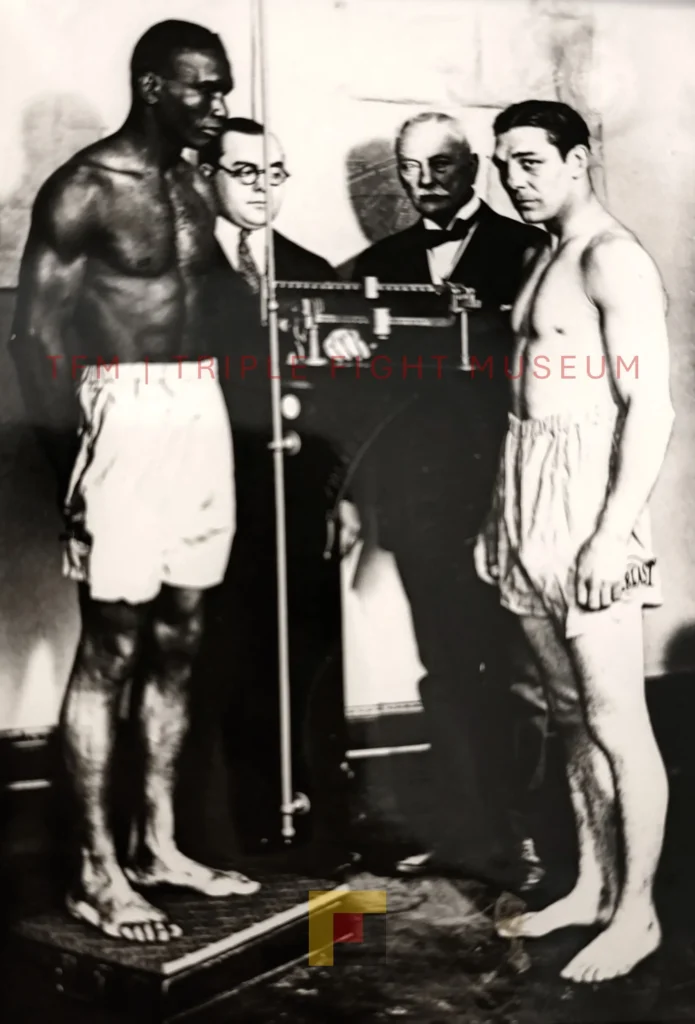
The Tale of Two American Middleweight Champions of the 1920s
Tiger Flowers
Harry Greb
This presentation is part of the TFM Series:
Boxing Champions in Black and White
PRESENTATION ACCESS PANEL
It Took A TIGER
To Fracture Boxing’s Color Line
Transformations Among Middleweights
Side-by-Side Comparisons
Tiger Flowers
Harry Greb
Champion Profiles
This presentation is part of the TFM Series:
Boxing Champions in Black and White
Part 3.0 F1-Fights in Rings (Boxers and Boxing)
The Fights of the 1920s
COMPARISONS
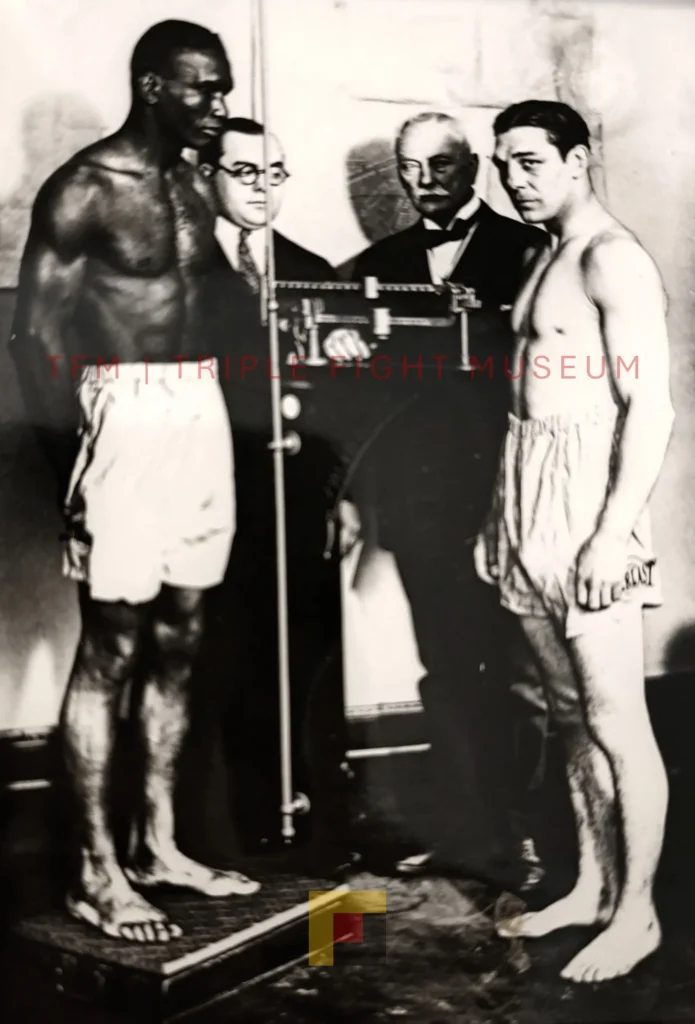
Discover how much these two champions had in common during the years they each pursued the World Middleweight Title.
Side-by-Side Comparisons: Middleweight Champions – Harry Greb and Tiger Flowers (1923-1926)
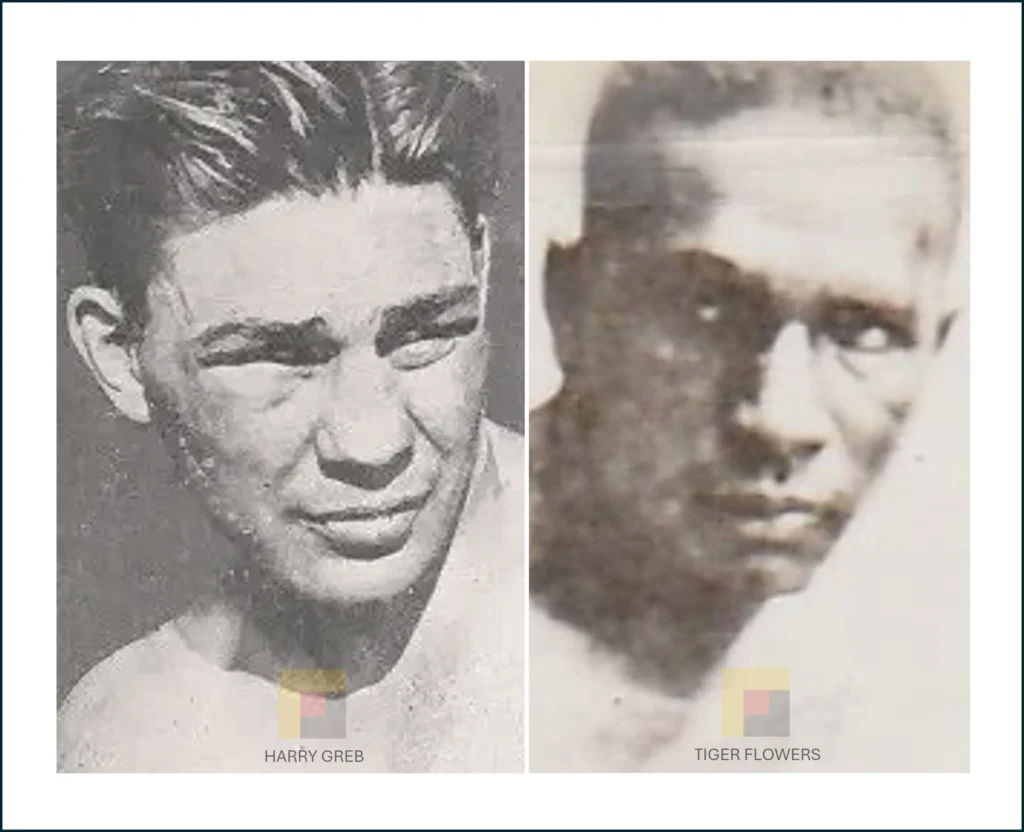
BACKGROUND
Introduction to the Greb-Forest Comparison
At TFM, we are interested in much more than the outcomes of fights, and in who did what before, after, and during the exchange of leather. Our aim is to understand the formal workings of the sport, which often involved unseen parties dictating outcomes that align with undocumented designs for themselves, the sport, and society as a whole. TFM’s presentation of “It Took a TIGER to Fracture Boxing’s Color Line,” is part of a larger analysis of the making of boxing champions in Black and White.
The Flowers–Greb comparison illustrates how TFM’s analytical framework reveals more than just fight outcomes; it exposes the competitive systems that shaped who advanced, where they fought, and how championship opportunities were constructed. This presentation compares Tiger Flowers and Harry Greb over a four-year period in which the two men were in each other’s orbit, beginning in 1923 and continuing through to Harry Greb’s untimely death in 1926. The confluence of the two men’s fight campaigns began as early as 1922, with ambitions steadily drawing them into a shared orbit. The exhibit card shown below, copyrighted in 1923, mentions two crucial facts: at the time the card was published, Tiger Flowers was the World ‘Colored’ Middleweight Champion, Johnny Wilson was still the World Middleweight Champion, and Flowers had already expressed interest in challenging Wilson.
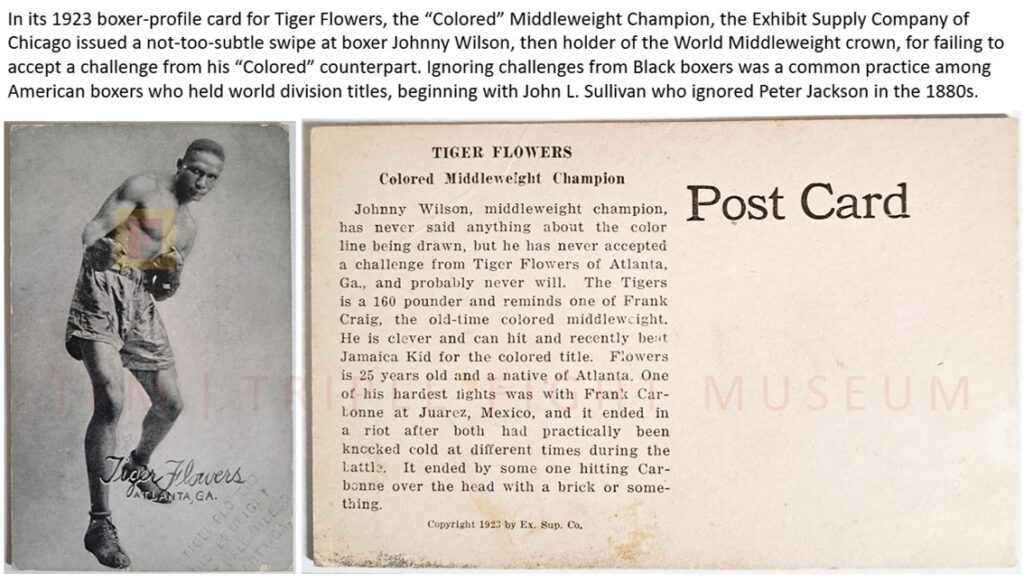
The postcard reveals a situation in boxing worth reflecting upon. When the postcard was published, Tiger Flowers had already begun challenging boxing’s color line, which was an informal agreement among boxing champions to block African Americans from title contention. The Exhibit Supply Company of Chicago intimated that Johnny White would likely ignore Flowers, meaning he would likely invoke the color line rule.

Then-World Middleweight Champion, Johnny White, had several developments to consider, and among them were not only the title aspirations of a man nicknamed the Georgia Deacon, but also those of a tough German-American boxer from Pittsburgh, Pennsylvania, named Harry Greb, who, like Flowers, was also eyeing the Middleweight Crown. This is where the TFM comparison begins, with two aspiring and highly capable boxers, one Black, the other white, eyeing a crown that had a legendary history and was worn by an Italian American from New York City, who happened to be the first Italian American to hold a world title.
Racial, ethnic, and regional rivalries were all at play during the 1920s, and “It Took A TIGER to fracture Boxing’s Color Line” offers a seldom explored window into that world, with considerations for what is needed to achieve breakthroughs today.
Why This Comparison Matters
Comparing distinguishing aspects of competitors is a universal practice among sports analysts, commentators, and historians. Such information is prized among sports fans and is typically the basis for much pre-competition conjecture regarding outcomes, which fuels gaming activities.
In boxing, comparing the physical attributes of competing boxers was a common feature of pre-fight newspaper coverage of a fight during the four decades that are the focus of THE TRIPLE FIGHT (1890-1929), a period in which there was extensive overlap between three categories of fights: F1-Fights in Rings (Boxing and Boxers), F2-Fights Among Nations (Military and War) and F3-Fights for Equality and Justice (in America and beyond).
Another set of fight comparisons involves examination of boxers’ fight records, which are typically distinguished by W-Wins, L-Losses, Draws (Equal Performance), and NC-No Count and No Decision (NC-ND typically occurring when a referee stopped a fight due to poor performance by the contenders).
At TFM, a boxer’s fight record is only part of the analysis. We like to begin by considering the number of fights undertaken and the number of opponents a boxer engaged over a period of time, and/or within a specific market. We are often interested in knowing the number of fighters a boxer encountered, say, in Philadelphia, in a given year or over their career. The number of contenders a fighter has met in a ring provides an indication of the breadth of their fight experience. This is an important qualifier because two boxers might have fought the same number of fights but encounter different numbers of ring rivals, and thus will have different depths of experience. A boxer might have had ten ring encounters in one year, but may have only engaged with five rivals, which means the fighter fought each rival an average of two times. The boxer with only five rivals had a different range of experiences than a fighter who had ten ring encounters with ten different rivals. In making side-by-side comparisons between boxers, we first list the number of fights they fought in a year followed by the number of contenders to underscore similarities or differences in the breadth of two boxers’ experience in a given year.
Another significant marker for us at TFM is the number of locations a boxer fought in, which signals the boxer’s prominence and viability within regional, national, and international markets.
We note relevant titles a boxer might have attained and then conclude with side-by-side comparisons of fight outcomes, which tells us how well a boxer campaigned in a given year.
Taken together, the multi-tiers of performance indicators provide an illuminating picture of how well each boxer performed in a given year and the geographical breadth of their annual campaigns. With this information in hand, we then consider three additional elements in our annual comparisons: 1) the alignment with championship efforts – either direct or indirect, 2) the number of opponents they had in common, and 3) any locations and venues they shared.
Such information provides a comprehensive framework for gauging the following:
– similarities and differences between two boxers in a given year and over time
– the competitiveness of the sport
– the structures of advancement within boxing, and
– the vibrancy of the Black boxing circuits and boxers.
Formulating a more complete picture of the ecosystems in which boing in America evolved is foundational to understanding and appreciating the fullness of boxing’s history and America’s history. This presentation brings to life two boxers worth remembering and, in so doing, reveals a community of boxers that was essential to the advancement of the sport and ultimately, American society. Black boxers, through their conditioning and ring battles, reflected extraordinary resiliency and resistance in a time of structured racial isolation and constraint. In so many ways, they embodied the fighting spirit of America.
About The Greb-Flowers Comparison and TFM’s 6-Part Framework
TFM has we devised a framework through which we examine people, places, and events pertaining to the three fights that comprise THE TRIPLE FIGHT: Fights in Rings (Boxers and Boxing), Fights Among Nations (Military and War), and Fights for Equality and Justice. In the right column, we look at how our Comparisons between boxing’s middleweight greats, Tiger Flowers and Harry Greb, aligns with our framework.
Here is our checklist ensuring the alignment of Champions with TFM’s six-part framework:
Part 01. Comparing Champions and THE TRIPLE FIGHT
The comparison illuminates study of THE TRIPLE FIGHT by amplifying two key elements: major developments with the sport of boxing [F1], and social inequality during the 1920s as evidenced in the sport of boxing, social advancement, and access to opportunities with boxing.
Part 02. Comparing Champions and ABOUT
TFM’s ABOUT section focuses on the following: 1) specific dimensions of a boxer’s personal and professional life that was significant during their career, 2) the state of the sport, the society, and the world, and ways in which dynamics within those spheres impacted the boxer and the sport; and 3) the geographic imprint of the sport and the boxer, which signals the resources supporting their careers and the markets that were open to them. The comparisons of Tiger Flowers and Harry Greb broaden understanding of each of the noted areas of focus and enrich appreciation for the times in which they lived.
Part 03. Comparing Champions and F1-Fights in Rings
The Comparison enriches understanding of one of the most significant championship quests of the 1920s, and period in which championship ranks were quite volatile. Through the comparison, we learn not only how competition in America’s middleweight division was structured, but also gain insight to the mechanisms at work, behind the scenes, controlling access and advancement in the sport.
Part 04. Comparing Champions and F2-Fights Among Nations (Military and War)
The Comparison of a portion of the careers of Tiger Flowers and Harry Greb provide an important window to understanding the effects of two Wars on American society and the sport of boxing. Harry Greb began his professional boxing career in 1913, the year New Mexico joined the Union as a state, and unrest in Mexico spilled over into that state, leading the U.S. to conduct what it called a Punitive Expedition three years later, which was followed by America’s entry into World War I. Greb’s career allows us to see how one extraordinary boxer advanced his career during one of the most turbulent periods in American history. By contrast, Tiger Flowers began his career in the Segregated South in 1919, a year that was filled with racial violence sparked by African Americans, particularly army veterans, were demanding the full rights of citizenship after supporting America’s war efforts. Those demands for equality received extensive pushback by those seeking to institutionalize segregation through Jim Crow laws. Although TFM does not have direct materials covering either men’s military activities, if any, the comparisons show that their boxing aspirations were occasionally conducted in state armories, which at the time were vital facilities across the American landscape.
Part. 05 Comparisons and F3-Fights for Equality and Justice
The Comparisons between Tiger Flowers and Harry Greb allow us to appreciate two distinct boxing ecosystems, distinguished by race. Tiger Flowers’ career is dotted with encounters with many outstanding boxers, most of who spent their careers battling one another within the restricted confines of Black boxing circles. It was in these circles that Flowers gained his first championship title, World ‘Colored’ Middleweight Champion. Our comparison shows that many of the title bouts were held in prominent venues in America and in major international markets, signaling substantial interest in the events. Although largely ignore in both current and subsequent accounts of boxing history, the viability of Black boxing circuits are a reality that produced a host of notable contenders, some of whom, like Tiger Flowers, eventually became World champions. Our comparison also allows us to contrast Flowers’ experiences with those of Harry Greb, who reached the pinnacle of the Middleweight Division through more celebrated competitive methods.
Part 06. Champion Comparisons and OTHER
TFM’s OTHER section provides space for consideration of how boxers and the sport of boxing influenced and was influenced by other sectors of society, ranging from the arts to the sciences. One of the most striking and disturbing outcomes experienced by Harry Greb and Tiger Flowers was their deaths, one year apart, for the same medical procedure involving routine removal of scar tissue that affected both men’s vision. The shocking death of both men were major news stories at the time, and TFM is honored to have in its collection a vinyl recording of Porter Grainger’s (The Singin’ Piano Man) “He’s Gone Home” – dedicated to Theodore Tiger Flowers.
Anchored within the TFM 6-Part Framework, this presentation is more than just a series of comparisons between two great boxers. It is a work that provides an important revelation into the fluidity and dynamics of a sport that was gaining universal acceptance and making a significant imprint within the social fabric of American life during the 1920s.
The comparisons in this presentation center on the ring meetings of Harry Greb and Tiger Flowers, which occurred three times over the course of three years, and reflected the competitiveness of the sport, the structures of advancement within boxing, and the vibrancy of the Black boxing circuits and boxers. Formulating a more complete picture of the evolution of boxing in America is foundational to understanding and appreciating the fullness of America’s history with sports and as a civil society. This presentation brings to life two boxers whose lives and ring accomplishments mattered during their lifetimes and still do. In addition, this presentation reveals of a community of boxers that were essential to the advancement of the sport, and ultimately American society. Black boxers, through their conditioning and ring battles, reflected extraordinary resiliency and resistance in a time of structured racial isolation and constraint. In so many ways, they embody the fighting spirit of America.
FIGHTS DURING THE TITLE YEARS
The comparisons presented below cover the four years in which Harry Greb and Tiger Flowers were at the top of the Middleweight division. The comparisons highlight similarities in their fight records while underscoring the reality of two competitive landscapes defined by race. Our aim in highlighting the points of overlap, as well as the distinct arenas in which they progressive is to provide a comprehensive view of boxing in America at the middleweight level during an exciting quest to claim the World Middleweight Championship. Greb and Flowers fought three times, once, in 1924, and twice in 1926, The outcome of their second ring encounter yielded the championship to Flowers, in what was more than an upset — it was the collision of parallel boxing worlds that marked a significant fracture in boxing’s color line.
By examining the records of Greb and Flowers side by side, we see more than how well they fought, we are able to discern the opportunities presented to them as part of a much larger construct, one designed to orchestrate advancements in the sport of boxing to align with the interests of America’s powerful in terms of race, class, and social advancement.
1923
INDEX
1923-01. Introduction
1923-02. Side-by-Side Comparison
1923-03. Championship Alignment
1923-04. Common Opponents
1923-05. Annual Summary
This presentation provides five windows into the realms of two middleweight champions in 1923, beginning with the introduction, which provides context for the overall presentation and the comparisons that follows. First among the comparisons is a side-by-side view of performance numbers that indicate the level of activity and engagement each boxer had during the year, as well as their success. In the next comparison provides a view of the two men’s alignments at the championship level and its influence upon the trajectory of their careers. Following a summary of the geographic scope of their battles, the next comparison focuses on the opponents that both men fought during the year. This look at opponents indicates points of convergence between the boxers’ respective spheres – beyond their direct rivalry. The implications of key findings are then summarized to close the presentation. Use the menu bar below to access background information and to view comparisons for the years 1923 through 1926.
Side-by-Side Comparisons: Middleweight Champions – Harry Greb and Tiger Flowers (1923-1926)
1923-01. Introduction
Harry Greb was a ten year veteran of professional boxing in 1923, with five more years of boxing experience than Tiger Flowers. Greb spent most of 1923 showing the world he had the goods to be the World Middleweight Champion after winning the division crown from Johnny Wilson, in January.
Tiger Flowers, nicknamed the Georgia Deacon for his deep religious faith, was also making a name for himself, scoring an impressive string of wins over rivals active among Black boxing circles. Among his accomplishments was a noteworthy title: World ‘Colored’ Middleweight Title.
In 1923, only a handful of the top Black boxers were able to compete regularly with willing white rivals, and Tiger Flowers had gathered the skills, experience, and credentials to be among them. What cannot be overlooked is the matter of likeability, it is something that frequently determines the success or failure of more athletes than most people care to admit. Likeability was especially important for Black boxers in the wake of America’s overwhelming rejection of Jack Johnson, the world’s first Black Heavyweight Champion. Tiger Flowers was well-liked by many Southern whites, which helped propel his ascent through division ranks and segregated circuits. In fact, Tiger’s manager said he was the Whitest Black Man he knew. While such a comment does not register as a compliment today, it constituted the passport needed for Flowers to enter into a world that led to white boxers like Harry Greb, and ultimately the division title.
Although Greb and Flowers began their fistic quests in siloed boxing environments, by 1923, currents were already pulling them towards a convergence. For a variety of reasons, boxing fans were not opposed to seeing battles among siloed champions. When Harry Greb won the world title from Johnny Wilson, there was already questions as to why the World Middleweight Champion would not battled the World ‘Colored’ Middleweight Champion, as evidenced in the remarks on the profile postcard published by the Exhibit Supply Company of Chicago (see below). While Flowers and Greb had no common opponents in 1923, there was surprising alignment in their fight numbers that year, as shown below. The lack of a common rival was less a matter of geography and more of a reflection of how boxing was structured in Post-War America, where segregation touched nearly every aspect of American life.
*
1923-02. Side-by-Side Comparison
Side-by-Side in 1923
Each year is presented to show how both fighters advanced through the 1920s.
• Bout Totals show activity level and campaign intensity.
• Opponents reflect the actual number of rivals encountered — indicating recurring rivalries.
• Common Opponents reveal where circuits overlapped — or remained separate.
• Locations highlight geography and access to markets.
• Results (W–L–D–NC) reveal the accumulated outcomes of matches during the year.
Taken together, these elements help us see not only breadth of activity and the outcomes for the year, but the scope of opportunity within the ring.
Tiger Flowers by the Numbers
(Fight Year: 1923)
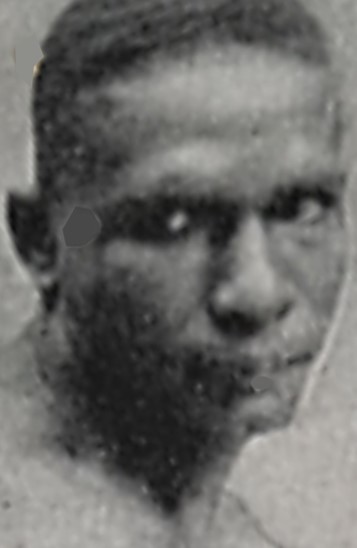
World Middleweight Champion
Championship Reign:
Feb.-Dec. 1926
Fights and Opponents
Number of Bouts
16
Number of Opponents
13
Fight Locations
Number of Countries
2
Mexico. USA
Number of American States
5
Fight Outcomes for Forest in 1923
Wins
14
Loses
2
Draws
0
No Count
0
Primary Sources: TFM Collection, Wikipedia and boxrec.com
Harry Greb by the Numbers
(Fight Year: 1923)

World Middleweight Champion
Championship Reign:
Jan. 1923-Feb. 1926
Fights and Opponents
Number of Bouts
17
Number of Opponents
13
Fight Locations
Number of Countries
1
USA
Number of American States
4
Fight Outcomes for Greb in 1923
Wins
14
Loses
3
Draws
0
No Count
0
Primary Sources: TFM Collection, Wikipedia and boxrec.com
BOXING FOOTPRINTS
The chart below lists the locations where Tiger Flowers and Harry Greb fought in 1923, along with the number of fights in each location.
1923

U.S. Locations Specific to Tiger Flowers
State
City (No. Fights)
Notes
GEORGIA (4)
Atlanta (4)
–
OHIO (4)
Springfield (2)
Toledo (2)
–
TENNESSEE (4)
Nashville (4)
–
International Locations Specific to Tiger Flowers
Country
City (No. Fights)
Notes
MEXICO (2)
Juarez (2)
–
U.S. Locations Shared by Flowers and Greb
State
Tiger Flowers
Harry Greb
MICHIGAN
Detroit (1)
Grand Rapids (1)
NEW YORK
Albany (1)
NYC-Manhattan (5)
Syracuse (1)
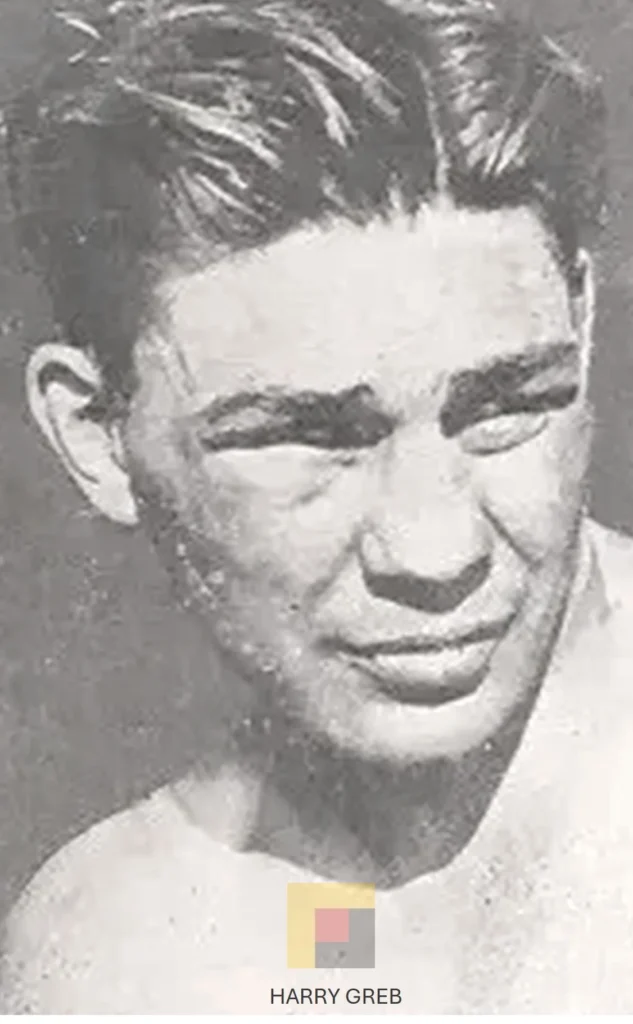
U.S. Locations Specific to Harry Greb
State
City (No. Fights)
Notes
NEW JERSEY (3)
Jersey City (1)
Newark (2)
–
PENNSYLVANIA (7)
Pittsburgh (6)
Uniontown (1)
–
In 1923, Tiger Flowers and Harry Greb operated in largely separate competitive spheres. Their annual fight campaigns featured multiple matches in their respective home states and towns. Flowers battled across five American states, and markets in those states were largely receptive to Black contenders. Greb, on the other hand, remained primarily in established northeastern markets, with numerous fights in his hometown of Pittsburgh. Both men fought once in Michigan, but in different cities, and both fought in New York, where Flowers had a match in Albany, the state capital, and Greb fought multiple matches in New York City and one in Syracuse. Neither boxer ventured west of the Mississippi.
*
1923-03. Championship Alignment
Championship Alignment in 1923
Tiger Flowers
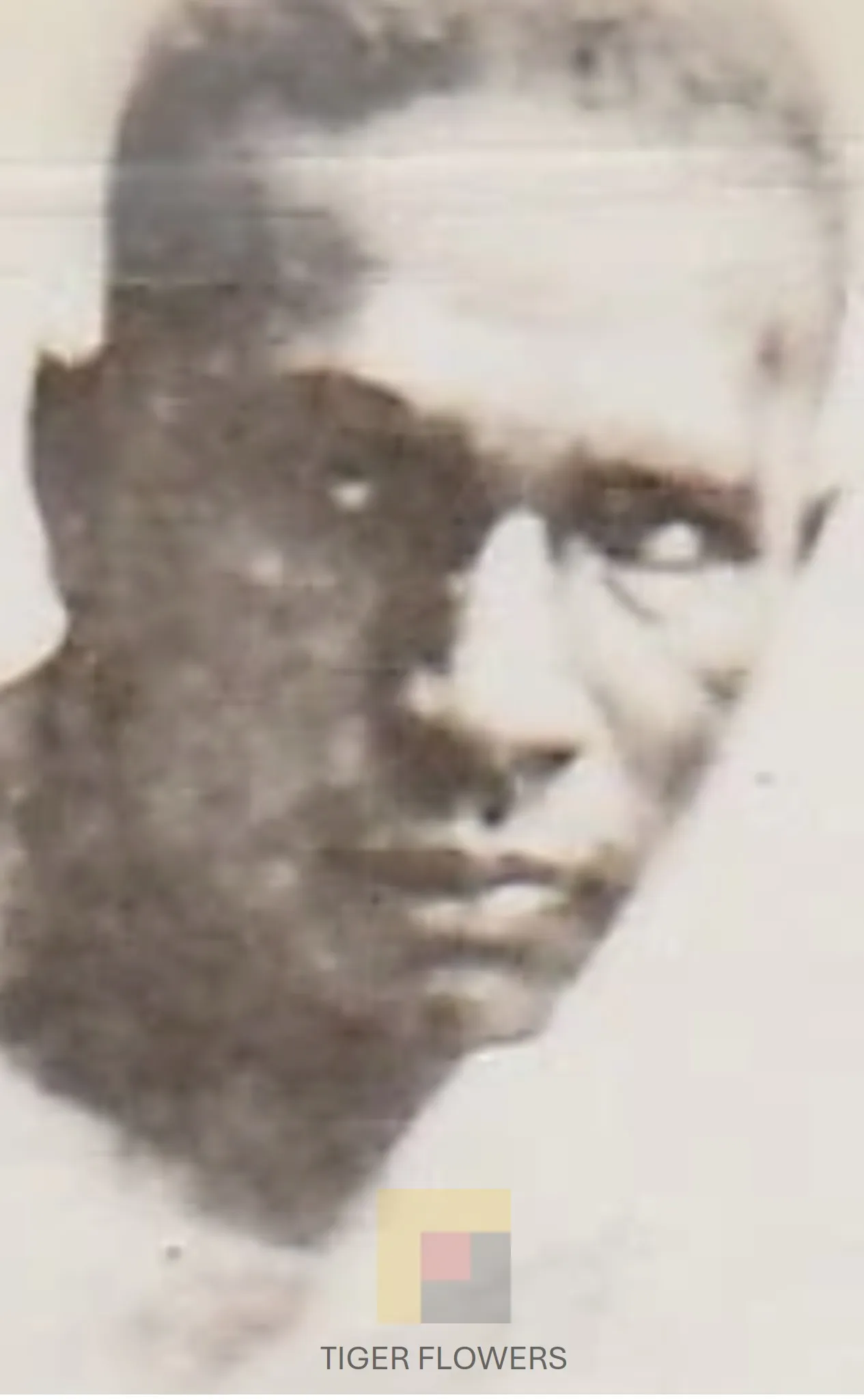
World ‘Colored’ Middleweight Champion
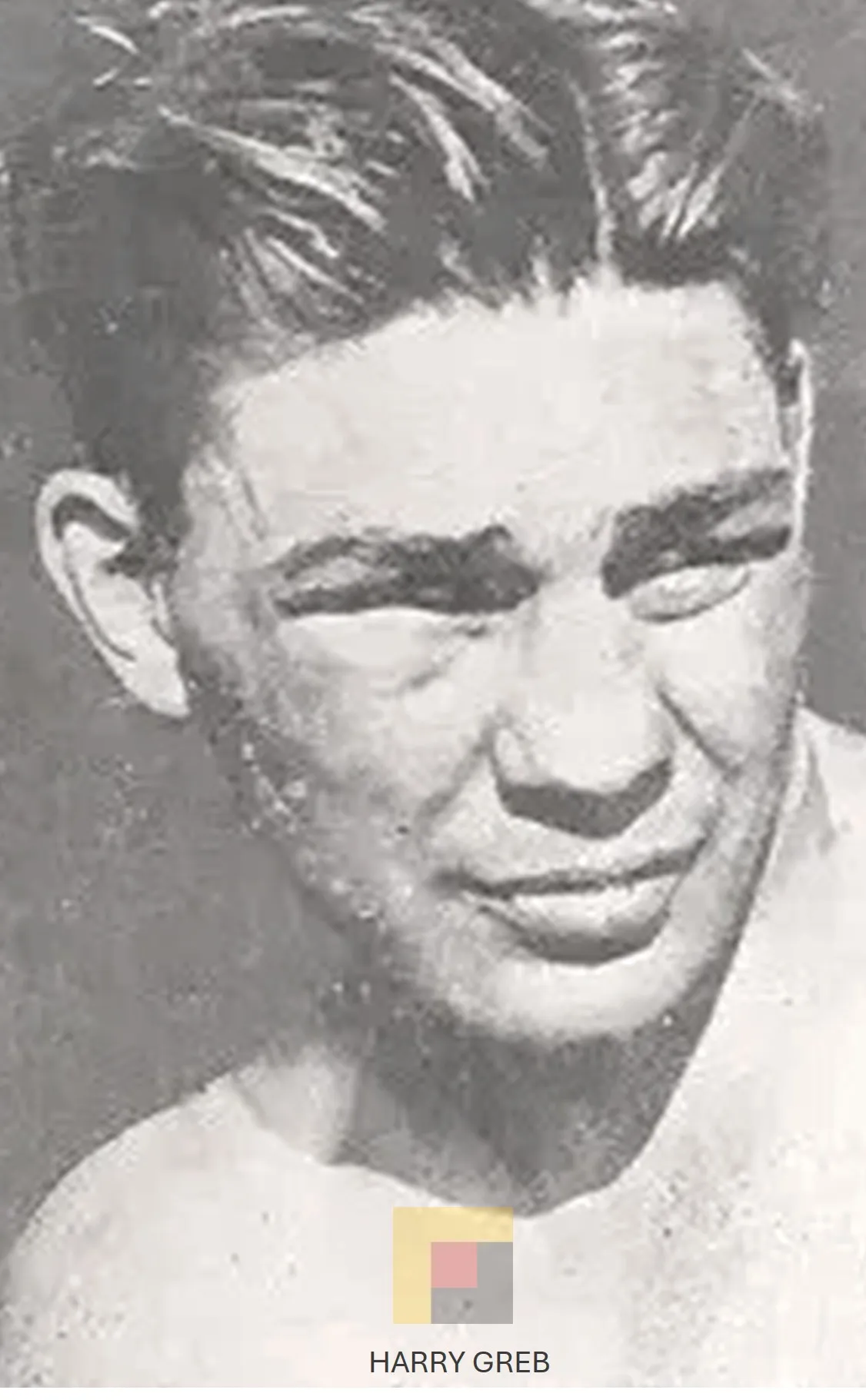
Harry Greb
World Middleweight Champion
In 1923, Tiger Flowers and Harry Greb operated in parallel but largely separate spheres with no actual points of overlap other than geographic. Flowers was recognized by the Exhibit Supply Company of Chicago as World ‘Colored’ Middleweight Champion in the company’s 1922 copyrighted postcard featuring the champion. In 1923, Harry Greb outpointed Johnny Wilson to win the World Middleweight Championship. The Exhibit Supply postcard is an essential piece of evidence showing that in 1923, there were two middleweight champions, one reigning globally over Black middleweights, and the other over all professional middleweights.
Tiger Flowers battled within a vibrant ecosystem, and in 1923he was challenged by another outstanding Black boxer, Kid Norfolk. Tiger retained his title by outpointing Kid Norfolk, but Norfolk was not done bringing a heightened level of excitement to the middleweight division. Shortly after losing to Flowers, Norfolk fought Harry Greb in a non-title bout and won by technical knockout. When we factor Kid Norfolk into the mix, it becomes clear that a door had been opened in 1923, permitting a few outstanding Black boxers to go beyond racial siloes and contend at premiere levels of the world middleweight division.
*
*
1923-03. Championship Alignment
No Common Opponents in 1923
Tiger Flowers
Zero Common Opponents
Harry Greb
In 1923, Tiger Flowers and Harry Greb conducted campaigns over the year that did not include a common ring rival. This would change in subsequent years, but the lack of convergence in 1923 reflects the racial and geographic siloes of the era, as they existed in America, across the middleweight division.
*
1923-05. Comparison Wrap Up
Wrap Up of 1923
Side-by-Side Comparisons: Middleweight Champions – Harry Greb and Tiger Flowers (1923-1926)
*
1924
INDEX
1924-01. Introduction
1924-02. Side-by-Side Comparison
1924-03. Championship Alignment
1924-04. Common Opponents
1924-05. Annual Summary
This presentation provides five windows into the realms of two middleweight champions in 1924, beginning with the introduction, which provides context for the overall presentation and the comparisons that follows. First among the comparisons is a side-by-side view of performance numbers that indicate the level of activity and engagement each boxer had during the year, as well as their success. In the next comparison provides a view of the two men’s alignments at the championship level and its influence upon the trajectory of their careers. Following a summary of the geographic scope of their battles, the next comparison focuses on the opponents that both men fought during the year. This look at opponents indicates points of convergence between the boxers’ respective spheres – beyond their direct rivalry. The implications of key findings are then summarized to close the presentation. Use the menu bar below to access background information and to view comparisons for the years 1923 through 1926.
Side-by-Side Comparisons: Middleweight Champions – Harry Greb and Tiger Flowers (1923-1926)
1924-01. Introduction
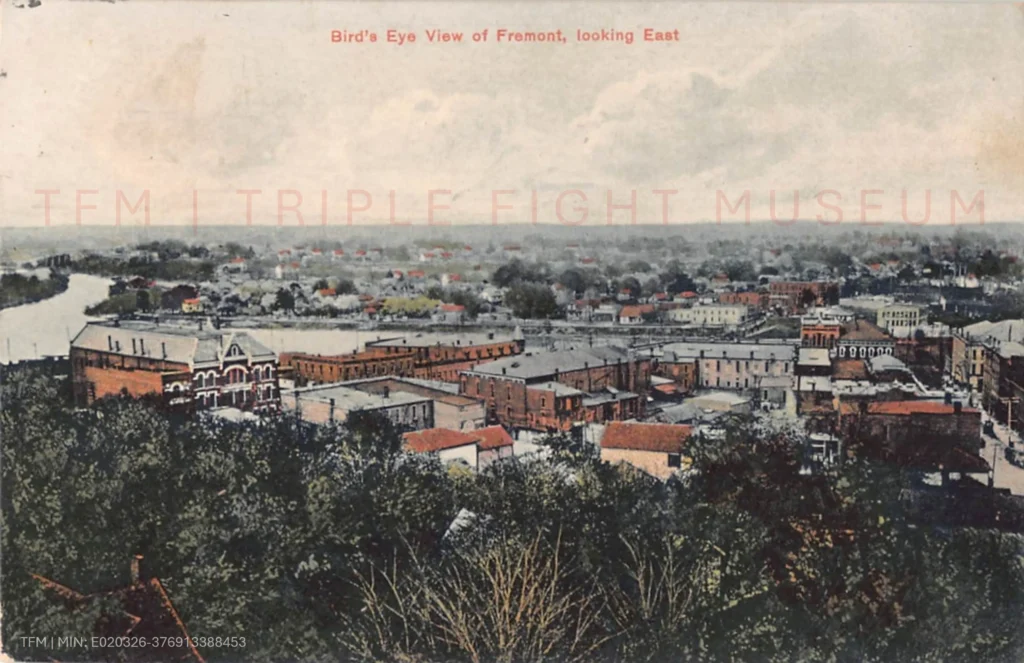
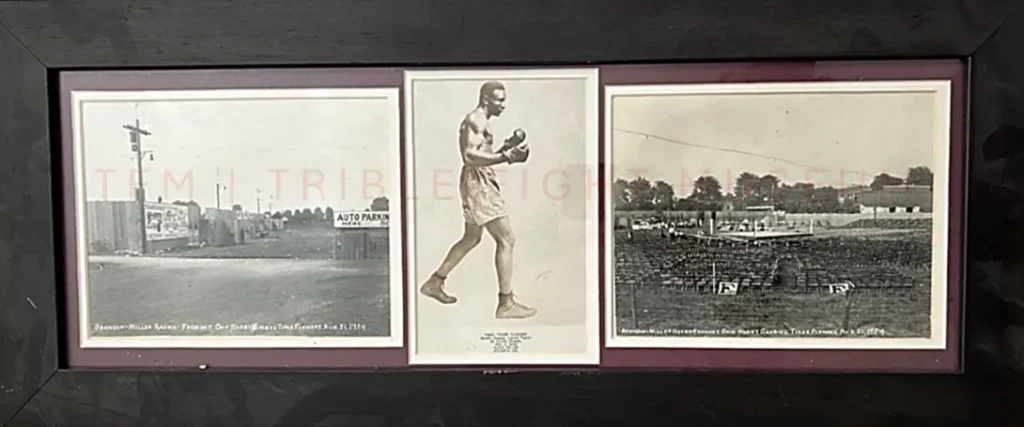
In 1924, the boxing scene in the Middleweight Division became very interesting. Tiger Flowers challenged Harry Greb for the division title and Greb encouraged Flowers to bring it on. The two met in an open-air, pop-up arena built in Fremont, Ohio, just for the title fight, which was anything but ordinary. Tiger Flowers’ ambitions signaled to the boxing world that he would not be satisfied holding the ‘colored’ version of the title, he wanted the world title. Equally impressive, Harry Greb agreed to the fight at a time when fans of Heavyweight boxing were wondering when they would get to the World ‘Colored’ Heavyweight Champion, Harry Wills, fight Jack Dempsey, the World Heavyweight Champion. A contract for Wills and Dempsey to fight was signed in 1925, but it never came to fruition. The Colored Line at the Heavyweight level remained in place. When Flowers challenged Greb, he was unable to defeat the champion and Greb retained the Middleweight Title. Despite the loss, Flowers’ attempt marked the first time since the end of World War 1 that a Black man challenged a world champion in any division.
Tiger Flowers and Harry Greb shared two white ring opponents in 1924: Jimmy Darcy and Johnny Wilson, Flowers fought Darcy in April, and Greb defeated Darcy six months later. Both Greb and Flowers battled Johnny Wilson at New York’s Madison Square Garden, at the beginning and end of the year, respectively, Wilson wanted to win back the World Middleweight Championship that Harry Greb won in 1923, but he was unsuccessful. Flowers further crushed the former champions comeback hopes when he bested Wilson with a technical knockout. Flowers fought twice as many bouts as Greb in 1924, and faced 22 opponents during the year compared to Greb’s seventeen. The year was the busiest in Flower’s career and the he fought 13 of his 36 matches in Ohio, delighting fans in 8 Ohio towns and cities. By the end of 1924, Flowers had demonstrated the ability to successfully navigate two worlds.
1924-02. Side-by-Side Comparison
Side-by-Side in 1924
Each year is presented to show how both fighters advanced through the 1920s.
• Bout Totals show activity level and campaign intensity.
• Opponents reflect the actual number of rivals encountered — indicating recurring rivalries.
• Common Opponents reveal where circuits overlapped — or remained separate.
• Locations highlight geography and access to markets.
• Results (W–L–D–NC) reveal the accumulated outcomes of matches during the year.
Taken together, these elements help us see not only breadth of activity and the outcomes for the year, but the scope of opportunity within the ring.
Tiger Flowers by the Numbers
(Fight Year: 1924)
World Middleweight Champion
Championship Reign:
Feb.-Dec. 1926
Fights and Opponents
Number of Bouts
36
Number of Opponents
22
Fight Locations
Number of Countries
1
USA
Number of American States
8
Fight Outcomes for Flowers in 1924
Wins
34
Loses
1
Draws
1
No Count
0
Primary Sources: TFM Collection, Wikipedia and boxrec.com
Harry Greb by the Numbers
(Fight Year: 1924)
World Middleweight Champion
Championship Reign:
Jan. 1923-Feb. 1926
Fights and Opponents
Number of Bouts
17
Number of Opponents
17
Fight Locations
Number of Countries
1
USA
Number of American States
8
Fight Outcomes for Greb in 1924
Wins
14
Loses
1
Draws
2
No Count
0
Primary Sources: TFM Collection, Wikipedia and boxrec.com
BOXING FOOTPRINTS
The chart below lists the locations where Tiger Flowers and Harry Greb fought in 1924, along with the number of fights in each location.
1924
U.S. Locations Specific to Tiger Flowers
State
City (No. Fights)
Notes
In 1924, five of the eight states where Flowers fought were not part of Harry Greb’s fight roster for that year.
GEORGIA (3)
Atlanta (3)
–
KENTUCKY (1)
Covington (1)
–
MICHIGAN (1)
Grand Rapids (1)
–
TENNESSEE (3)
Nashville (3)
–
TEXAS (2)
San Antonio (2)
–
No International Locations in 1924
U.S. Locations Shared by Flowers and Greb
State
Tiger Flowers
Harry Greb
NEW YORK
Buffalo (1)
NYC-Manhattan (9)
Buffalo (1)
NYC-Bronx (1)
NYC-Brooklyn (2)
NYC-Manhattan (1)
OHIO
Barberton (1)
Canton (2)
Columbus (3)
Fremont (3)
Hamilton (1)
Martins Ferry (1)
Toledo (1)
Zanesville (1)
Fremont (1)
Mingo Junction (1)
PENNSYLVANIA
Philadelphia (3)
Philadelphia (1)
Philipsburg (1)
Pittsburgh (2)
U.S. Locations Specific to Harry Greb
State
City (No. Fights)
Notes
In 1924, five of the eight states where Greb fought were not included in Tiger Flowers’ fight roster for that year.
CALIFORNIA (1)
Oakland (1)
–
CONNECTICUT (1)
Waterbury (1)
–
MARYLAND (2)
Baltimore (1)
Kenilworth (1)
–
MASSACHUSETTS (1)
Boston (1)
–
WEST VIRGINIA (1)
Wheeling (1)
–
By 1924, both fighters had solidified their reputations within the middleweight division, though much of their fighting environments continued to differ. Indirect connections with prominent opponents signaled a gradual convergence of Black and white ecosystems at higher competitive levels. Even so, the geography of their campaigns reflects distinct promotional networks and audience bases.
*
1924-03. Championship Alignment
Championship Alignment in 1924
For Harry Greb, the reigning Middleweight Champion, 1924 was a year in which he dispelled the title aspirations of a former titleholder as well as a parallel champion.
One Shared Title Bout …
Tiger Flowers
World ‘Colored’ Middleweight Champion
Harry Greb
World Middleweight Champion
Tiger Flowers vs. Harry Greb – No. 1
Fight No.
Date
Venue
City and State
Nation
Fight Outcome
Middleweight Title Bout
TF-26-01
HG-26-07
1926-Feb-26
Madison Square Garden
NYC-Manhattan, NY
USA
Flowers Won-PTS
Points
*
Tiger Flowers vs. Harry Greb
Fight No.
Date
Venue
City and State
Nation
Fight Outcome
Middleweight Title Bout
TF-24-20
HG-24-10
1924-Aug-21
Bronson-Miller Arena
Fremont, OH
USA
Greb Won-NWS
Newspaper Decision
*
… Brings a Special Distinction to an Ohio Town.
Fremont, Ohio is celebrated for hosting the Flowers-Greb Title Bout of 1924, the first mixed-race title bout in America since Jack Johnson’s defended his title against Fireman Jim Flynn, in 1912.
A boxing enthusiast framed three photographs, commemorating Tiger Flower’s participation in Fremont, Ohio’s most significant boxing match ever held in Fremont, Ohio. TFM acquired the piece in 2026, which provides views of the temporary arena constructed for the fight as well as the parking area reserved for vehicles of fight attendees.
*
*
1924-03. Championship Alignment
Two Common Opponents in 1924
Jimmy Darcy
Johnny Wilson
Outcomes of Fights with Jimmy Darcy
Tiger Flowers
*
1

Jimmy Darcy
Harry Greb
Tiger Flowers vs. Jimmy Darcy
Fight No.
Date
Venue
City and State
Nation
Outcome for Flowers
TF-24-09
1924-Apr-19
Commonwealth Sporting Club
NYC-Manhattan, NY
USA
W-PTS
*
Harry Greb vs. Jimmy Darcy
Fight No.
Date
Venue
City and State
Nation
Outcome for Greb
HG-23-10
1923-Oct-04
Forbes Field
Pittsburgh, PA
USA
W-NWS
*
Outcomes of Fights with Johnny Wilson
Tiger Flowers
*
2
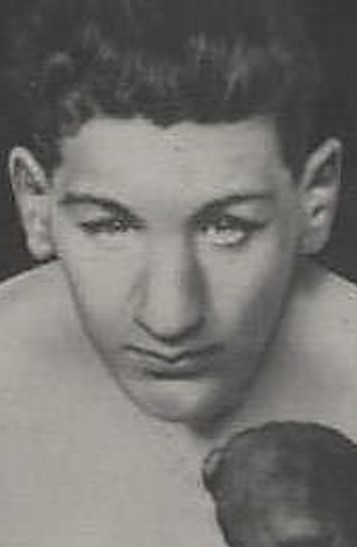
Johnny Wilson
Harry Greb
Tiger Flowers vs. Johnny Wilson
Fight No.
Date
Venue
City and State
Nation
Outcome for Flowers
TF-24-34
1924-Dec-09
Madison Square Garden
NYC-Manhattan, NY
USA
W-TKO
*
Harry Greb vs. Johnny Wilson
Fight No.
Date
Venue
City and State
Nation
Outcome for Greb
World Middleweight Title
HG-24-01
1924-Jan-18
Madison Square Garden
NYC-Manhattan, NY
USA
W-UD
A Common Opponent in a Common Venue
When aspiring champions, champions, and former champions clash, it is typically a major fight event, and so it was when Tiger Flowers and Harry Greb each battled Johnny Wilson in 1924. Wilson held the World Middleweight Title from May 6, 1920, to August 31, 1923, when Harry Greb donned the crown.
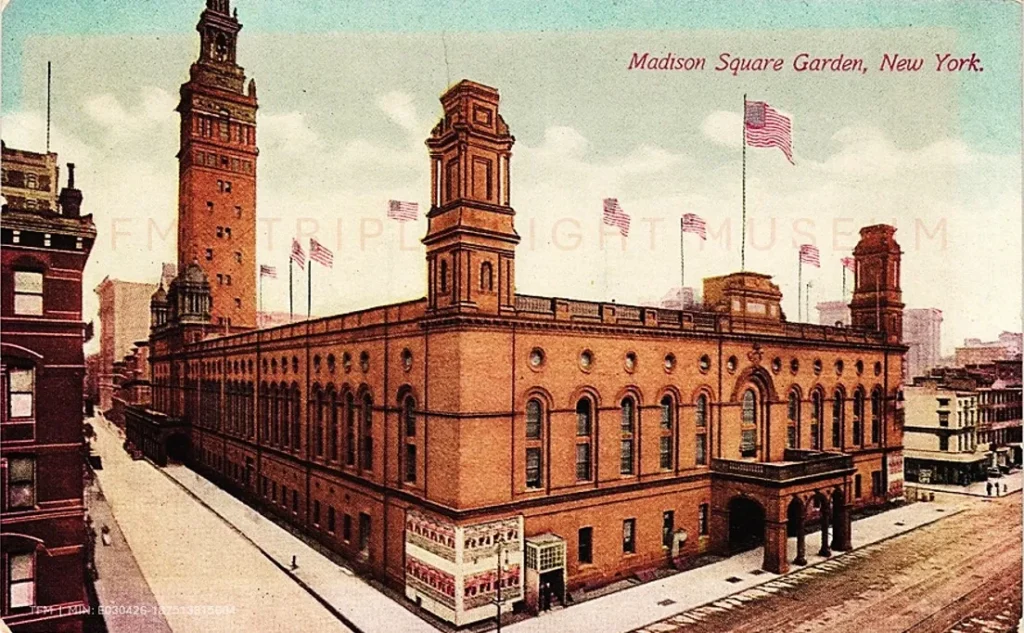
A progression of claims to the World Middleweight Championship played out at the Old Madison Square Garden in 1924, a year that began with Johnny Wilson attempting to reclaim the title after losing it to Harry Greb by unanimous decision in August 1923. Wilson failed to produce an upset and once again lost by unanimous decision.
In December, Tiger Flowers signaled his intention to be a future title contender for the Middleweight Crown by handing Johnny Wilson a technical knockout. But Wilson still dreamt of a comeback, which he attempted in April of 1925, with a third match against Harry Greb. Greb outpointed Wilson, and five matches after losing to Greb, Johnny Wilson hung up his gloves for good. The decision was likely prompted by the two losses Wilson experienced at the hands of future World Light Heavyweight Champion, Maxie Rosenbloom.
Below is a Postcard View of the second Manhattan structure to be named Madison Square Garden. It opened in 1890 and was home to numerous legendary fights and fighters, including both Black-on-Black and mixed-race matches.
Three Successive Middleweight Champions of the 1920s Who Faced One Another in 1924.
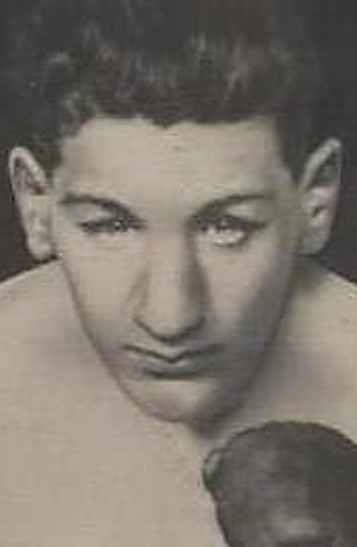
Johnny Wilson
USA-(NY)
Fight Years:
Middleweight Champion:
1920-1923
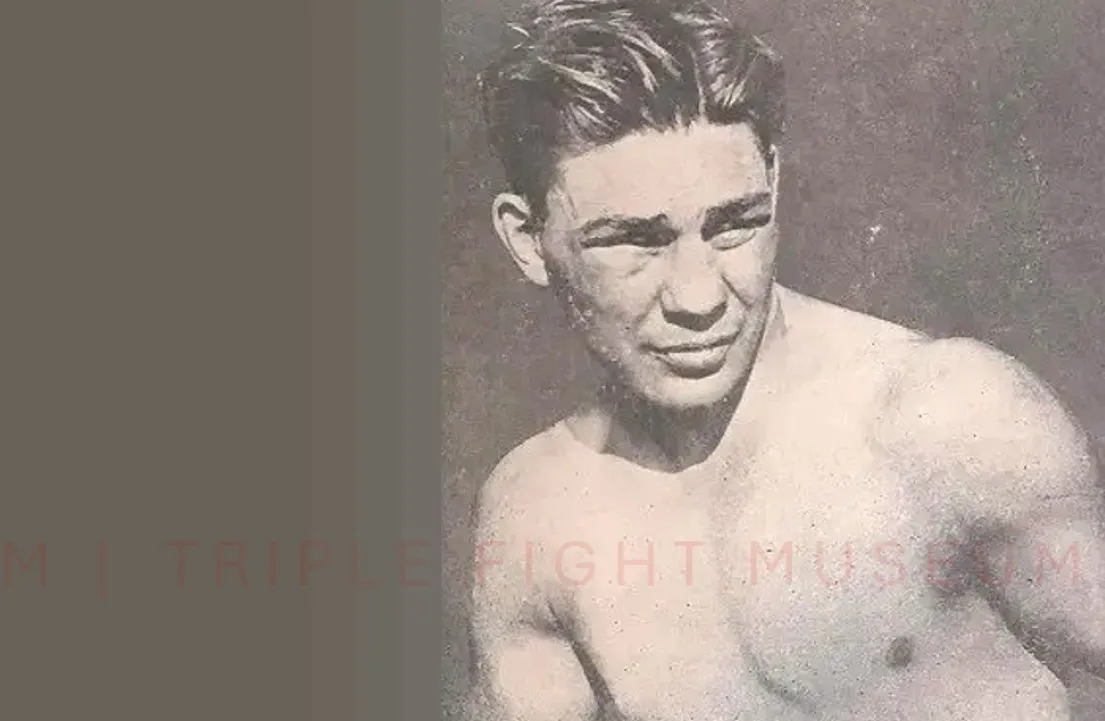
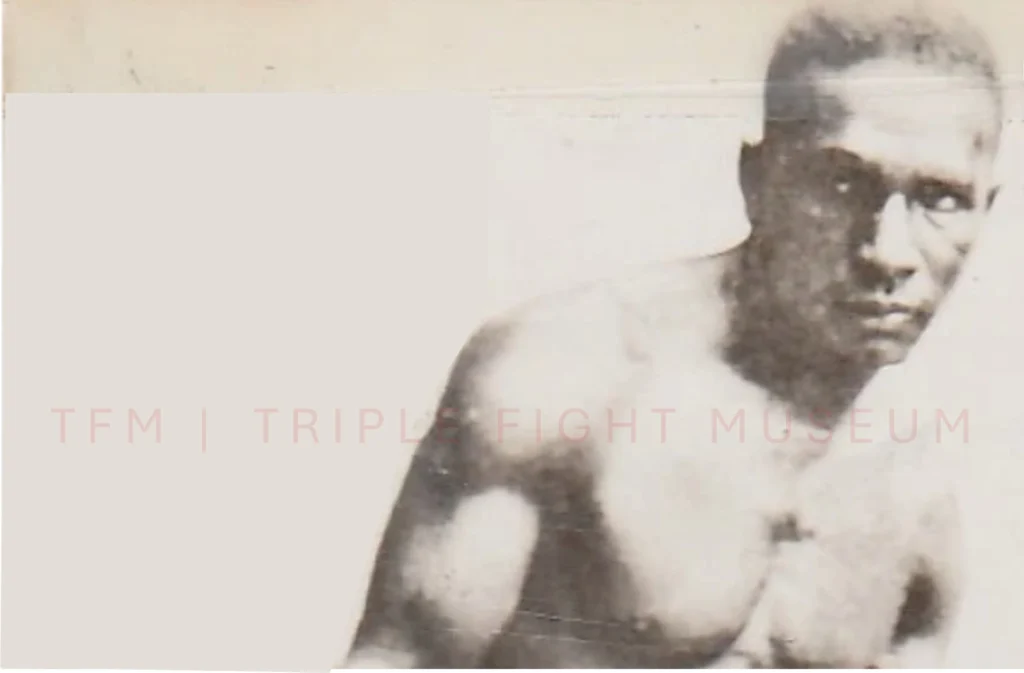
Tiger Flower’s ascent to the championship level marked a transformative fracture in boxing’s color line, which ultimately led to greater diversity among boxing champions in the 1930s and 1940s.
In 1923, Tiger Flowers and Harry Greb conducted campaigns over the year that did not having a common ring rival. This would change in subsequent years, but the lack of convergence in 1923 reflects the racial and geographic siloes of the era, as they existed in America, across the middleweight division.
*
1924-05. Comparison Wrap Up
Wrap Up of 1924
Side-by-Side Comparisons: Middleweight Champions – Harry Greb and Tiger Flowers (1923-1926)
1925
Tiger Flowers and Harry Greb had no direct contact in 1925, but the both fought a common rival, Billy Britton. Harry Greb battled Britton three times over the course of the year, and outpointed his opponent each time. By contrast, Flowers exchanged leather only once with Britton, and won decisively with a technical knockout. The year was a busy one for both middleweight champions. Flowers lost five matches in 1925 compared to only one loss for Greb, but Flowers scored more wins overall than Greb, who fought 25 matches during the year, compared to 31 for Flowers. The only boxer to stop Greb was Gene Tunney, a light heavyweight contender who was eyeing a chance to battle Jack Dempsey for the World Heavyweight Title. Within 18 months of defeating Greb, Gene Tunney would succeed Jack Dempsey as the preeminent champion in all of boxing. Gene Tunney’s ascent coincided with Dempsey’s refusal to ignore the color line by fight Harry Wills. Exceptional boxers like Wills and Flowers was responding to fans’ desire to see ‘colored’ champions compete for world titles. It was increasingly apparent to most observers that it would only be a matter of time before Flowers would again challenge Greb for the world title.
One Common Opponent in 1925
Tiger Flowers
*
1
Billy Britton
Harry Greb
Tiger Flowers vs. Billy Britton
Fight No.
Date
Venue
City and State
Nation
Outcome for Flowers
TF-25-02
1925-Jan-05
Mechanics Building
Boston, MA
USA
W-TKO
*
Harry Greb vs. Billy Britton
Fight No.
Date
Venue
City and State
Nation
Outcome for Greb
HG-25-05
1925-Feb-17
Mealy’s Auditorium
Allentown, PA
USA
W-PTS
HG-25-11
1925-May-06
Fairmont Arena
Columbus, OH
USA
W-PTS
HG-25-17
1925-Jul-22
Anti Horse Thief Association Stock Show
Columbus, OH
USA
W-PTS
*
Tiger Flowers by the Numbers
(Fight Year: 1925)
World Middleweight Champion
Championship Reign:
Feb.-Dec. 1926
Fights and Opponents
Number of Bouts
31
Number of Opponents
22
Fight Locations
Number of Countries
1
USA
Number of American States
12
Fight Outcomes for Flowers in 1925
Wins
26
Loses
5
Draws
0
No Count
0
Primary Sources: TFM Collection, Wikipedia and boxrec.com
Harry Greb by the Numbers
(Fight Year: 1925)
World Middleweight Champion
Championship Reign:
1923-Feb. 1926
Fights and Opponents
Number of Bouts
25
Number of Opponents
20
Fight Locations
Number of Countries
2
Canada, USA
Number of American States
13
Fight Outcomes for Greb in 1925
Wins
24
Loses
1
Draws
0
No Count
0
Primary Sources: TFM Collection, Wikipedia and boxrec.com
In 1925, Flowers and Greb stood at the summit of their racially defined middleweight siloes. Activity levels and opponent quality reflected their elevated positions. Greb’s bouts remained concentrated within established northern markets, while Flowers continued to demonstrate broader geographic mobility. The data show parallel advancement toward a championship collision that would soon define both careers.
Side-by-Side Comparisons: Middleweight Champions – Harry Greb and Tiger Flowers (1923-1926)
1926
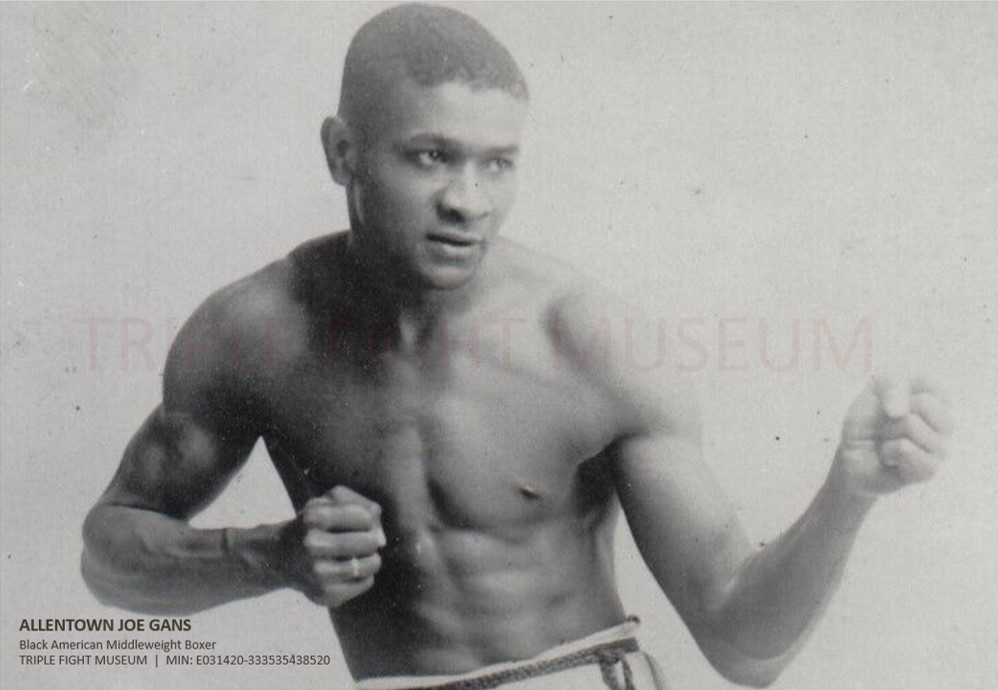
This was Tiger Flowers break through year. In February, in front of an electrified crowd at Madison Square Garden, Flowers successfully challenged Harry Greb for the World Middleweight Championship, becoming the first African American to win the division title and the first Black man to challenge an incumbent division titleholder in the United States, since Jack Johnson was dethroned as World Heavyweight Champion by Jess Willard in 1915. Greb attempted to win back the title in August, but failed to achieve that goal. Greb’s failed attempt to regain his former title marked the final ring battle the two men would engage in. After breaking the color line within the Middleweight Division, other prominent boxers sought to test and undo Flowers, including Allentown Joe Gans, who fought experienced loss at the end of his battles with Flowers and Greb in 1926. Interestingly, Flowers and Greb both battled Allentown Joe Gans in Wilkes-Barre, Pennsylvania, at locations associated with America’s military, which positioned the matches under TFM’s look at F2-Fights Among Nations (Military and War). Flowers fought Gans in an armory in April of 1926, while Greb and Gans battled at the city’s Artillery Park in June.
The unthinkable happened in October. Harry Greb went for what was suppose to be a routine medical procedure to remove scare tissue from around his eyes. He developed an infection that took his life and ended one of the most prolific and stimulating careers in professional boxing.
Two Title Bouts in 1926
Tiger Flowers
Harry Greb
Tiger Flowers vs. Harry Greb – No. 1
Fight No.
Date
Venue
City and State
Nation
Fight Outcome
Middleweight Title Bout
TF-26-01
HG-26-07
1926-Feb-26
Madison Square Garden
NYC-Manhattan, NY
USA
Flowers Won-PTS
Points
*
Tiger Flowers vs. Harry Greb – No. 2
Fight No.
Date
Venue
City and State
Nation
Fight Outcome
Middleweight Title Bout
TF-26-08
HG-26-10
1926-Aug-19
Madison Square Garden
NYC-Manhattan, NY
USA
Flowers Won-SD
Split Decision
*
One Common Opponent in 1926
Tiger Flowers
*
1

Allentown Joe Gans
Harry Greb
Tiger Flowers vs. Allentown Joe Gans
Fight No.
Date
Venue
City and State
Nation
Outcome for Flowers
TF-26-02
1926-Apr-16
South Main Street Armory
Wilkes Barre, PA
USA
W-UD
Harry Greb vs. Allentown Joe Gans
Fight No.
Date
Venue
City and State
Nation
Outcome for Greb
HG-26-08
1926-Jun-15
Artillery Park
Wilkes-Barre, PA
USA
W-UD
A Common Opponent and A Location in Common
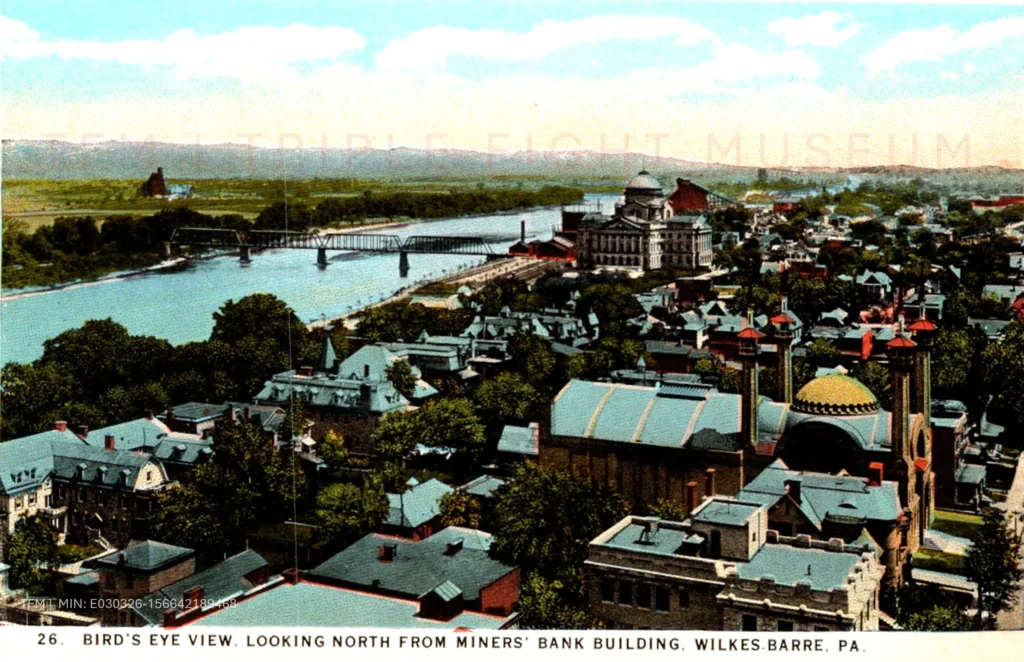
Boxing Champions Were No Strangers to Wilkes-Barre in Pennsylvania
Below are Postcard Views of Wilkes-Barre and the 9th Regiment Armory Located on South Main Street, Where Boxers Came to Fight.
After winning the World Middleweight Title, Tiger Flowers continued to engage Black rivals.
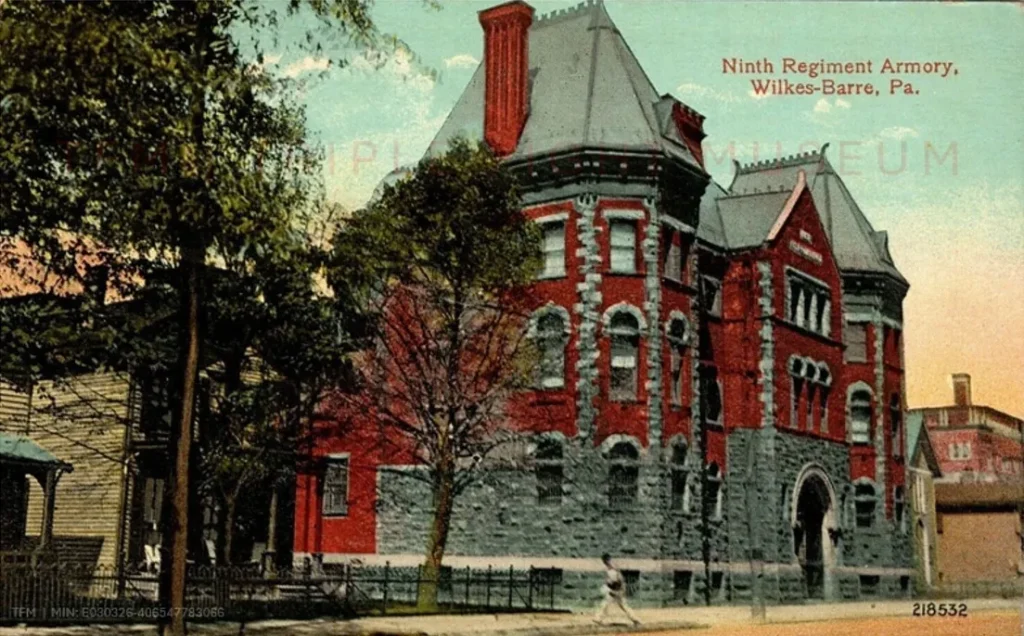
The April 16, 1926 bout between Tiger Flowers and Allentown Joe Gans was their fifth and final meeting. Tiger won all five of his encounters with Gans. There final match was held in the 9th Regiment Armory, located on South Main Street. The armory was a historic structure frequently used to host boxing matches.
Allentown Joe Gans is a boxer worth knowing. He was ambitious and eager to battle top-tier talent – seemingly with little regard of any color line. In April 1926, he met Tiger Flowers, the newly crowned World Middleweight Champion, and two months later, he squared off against Harry Greb, the former Middleweight Champion. It was Greb’s one stop before challenging Flowers for the title. Allentown Joe Gans met both Flowers and Greb in Wilkes-Barre, a town in Pennsylvania’s mining district, a region noted for producing capable boxers, including Scranton’s Pete Latzo, who won the World Welterweight Title in 1926. The following year, Pete Latzo climbed into a ring to face Tiger Flowers after both men had lost their titles. That fight would be Flowers’ last in Wilkes-Barre.
Tiger Flowers by the Numbers
(Fight Year: 1926)
World Middleweight Champion
Championship Reign:
Feb.-Dec. 1926
Fights and Opponents
Number of Bouts
12
Number of Opponents
10
Fight Locations
Number of Countries
2
Mexico. USA
Number of American States
8
Fight Outcomes in 1926
Wins
10
Loses
2
Draws
0
No Count
0
Primary Sources: TFM Collection, Wikipedia and boxrec.com
Harry Greb by the Numbers
(Fight Year: 1926)
World Middleweight Champion
Championship Reign:
1923-Feb. 1926
Fights and Opponents
Number of Bouts
10
Number of Opponents
9
Fight Locations
Number of Countries
2
Canada, USA
Number of American States
6
Fight Outcomes in 1926
Wins
9
Loses
1
Draws
0
No Count
0
Primary Sources: TFM Collection, Wikipedia and boxrec.com
Points of comparison in the careers of Harry Greb and Mickey Walker come to an end in 1926 after Greb’s untimely and unexpected death in October. Prior to his death, from 1923 to 1926, we see the progression of two exceptional athletes aided by strategic managers who capitalized on opportunities in a highly structured but transforming ecosystem. The two men’s journey reflected ambitions fueled by the American Dream. Their achievements are more than sports lore, they are meaningful examples of human potential to rise above limitations when coupled with supportive resources and timely opportunity.
Side-by-Side Comparisons: Middleweight Champions – Harry Greb and Tiger Flowers (1923-1926)
*
Summary and Conclusion
The Flowers–Greb comparison reveals that championship boxing in the 1920s did not operate within a single unified arena. Instead, fighters often advanced through distinct competitive circuits shaped by geography, promotion, and race. While the convergence of their paths culminated in two title bouts in 1926, the process of convergence began earlier with their meeting in Fremont, Ohio in August 1924, and continued through the presence of common opponents in the years that followed.
Their distinct career trajectories illuminate the broader racial and geographic segmentation of that defined much of American society at that time. Harry Greb achieved prominence primarily in northern venues that featured largely white ring rivals, while Tiger Flowers built his record across a broader geographic landscape that included regional markets and international circuits catering to fans of Black boxing.
When their professional pursuits finally converged at the championship level in 1926, the result marked the beginning of an extraordinary transformation. Flowers’ win over Greb distinguished him as the first African American to hold the World Middleweight title, and in the decade that followed, more African Americans would win world titles across multiple divisions than in any previous era of the sport. While Flowers’ achievements and those that followed did not lessen America’s racial divide beyond the ring, it gave Black boxers a level of visibility and acclaim that inspired generations and gradually lessened segregation in all sports.
Thus, the Flowers–Greb rivalry reminds us that the history of boxing is more than a record of fights; it is also a record of how opportunity itself was structured and advanced within American society. These more expansive approach to history invites thinking individuals to not only consider the nature of opportunity in America today, but to work towards crafting more inclusive corridors of inclusion and advancement, now and in the future. That is what it means to be in the FIGHT FOR GOOD.
About TFM and F1-FIGHTS in RINGS (Boxers and Boxing). TFM is committed to telling the history of boxing as an international sport and with the broadest lens possible. We pay particular attention to ways in which boxing was cultivated and positioned in America to advance notions of power, masculinity, virtue, dominance, and opportunity from the outset of the American Empire in 1890, through the 1920s. Through multiple presentations, TFM illustrates how boxing functioned not only as a sport but as a powerful lens through which life was experienced, interpreted, and remembered during the four decades that best reflect THE TRIPLE FIGHT (1890-1929).
Coming Soon
More of F1
FIGHTS IN RINGS
(Boxers and Boxing)
*